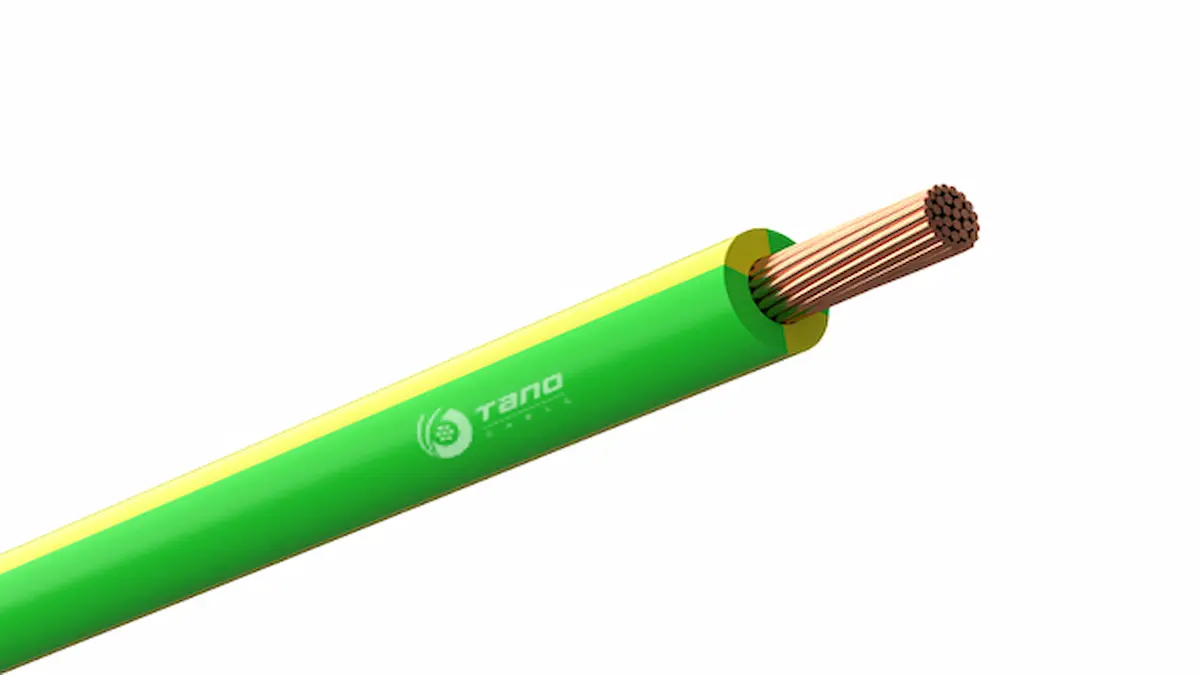
Have you come across T W cable while planning your home renovations, electrical upgrades, or even a possible solar project? Many ask themselves the question whether TW is still the wiring option considering newer alternatives like THHN and THWN.
In this guide, I will break down everything you need to know about TW cable as a practical buyer. Price, sizes available, ideal applications, and top alternatives if you need something a bit more durable.
What Is T W Cable? (A Quick Recap)
TW stands for Thermoplastic-coated, moisture-resistant wire. It is one of the simplest and oldest types of building wires, which is insulated by thermoplastic that provides relatively moderate protection against moisture.
TW cables are:
- Able to withstand a maximum temperature of 60°C (140°F).
- Designed primarily for indoor wiring inside conduits.
- Used for general lighting, outlets, and low wattage appliances in homes.
Although TW remains quite cheap and good for simple wiring, modern electrical codes do not recommend it much anymore. The codes go for THHN or THWN wires nowadays since they are better heat- and water-resistant.
Price and Availability of TW Cable
The price varies depending on size (AWG rating), the type of conductor (copper or aluminum), and where one buys the cable. The average pricing for the year 2025 is:
- 14 AWG copper TW cable → $0.10 – $0.25 per foot
- 12 AWG copper TW cable → $0.20 – $0.40 per foot
- 10 AWG copper TW cable → $0.40 – $0.70 per foot
- 100 ft rolls → approximately $15 – $60 depending on gauge
TW cables are sold in hardware stores, electrical supply stores, and online stores. However, most stores have a stock of THHN/THWN as the go-to because these largely replaced TW in new installations.
TW Cable Sizes and Ampacity for Domestic Use
Before getting to choose a wire, it is vital to ensure thatthe ampacity (current capacity) of the cable is correct for the devices the wire is powering. Below is a quick chart for TW wire (at 60°C):
| Size (AWG) | Ampacity | Typical Application |
|---|
| 14 AWG | 15 Amps | Lighting circuits, small outlets |
| 12 AWG | 20 Amps | Standard outlets, small appliances |
| 10 AWG | 30 Amps | AC units, water heaters |
| 8 AWG | 40 Amps | Larger appliances, sub-panels |
| 6 AWG | 55 Amps | Feeders, heavy electrical loads |
Safety note: Never exceed the rated ampacity of your wire. Overloading a cable is one of the most common reasons for MCB tripping and electrical fires.
Is TW Cable Good for Solar Installations?
The TW cable can be used in indoor DC wiring for solar setups, such as connecting a battery bank to an inverter that are inside a controlled environment composite. But it is not the best in modern solar setups because:
- It is only rated for 60°C whereas the higher-temperature solar wiring usually has higher temperatures.
- It is not ultraviolet resistant; sunlight exposure directly without conduit is a big no-no.
- It does not have water-resistance like THWN-2 or PV-rated cables.
Most experts would have suggested THWN-2 or USE-2 cables for solar projects, as these cables are both made for outdoor conditions, much higher temperatures, and long-term exposure.
For a complete guide on TW cable, check out our in-depth article: TW Cable: Meaning, Uses, Types, Sizes, and Guide (2025) on Top Solar Picks.
Which is Better: TW Cable or Other Wires?
Here is a quick view of comparing TW cable and some of the most commonly used applications’ most common alternatives.